VisaGo: Paris 2024 Olympic & Paralympic Games
Designing Visa’s first direct-to-consumer app for a global, inclusive audience.
Main Role: UX Designer (Lead on Accessibility & Consumer Experience)
Context: A Strategic Milestone
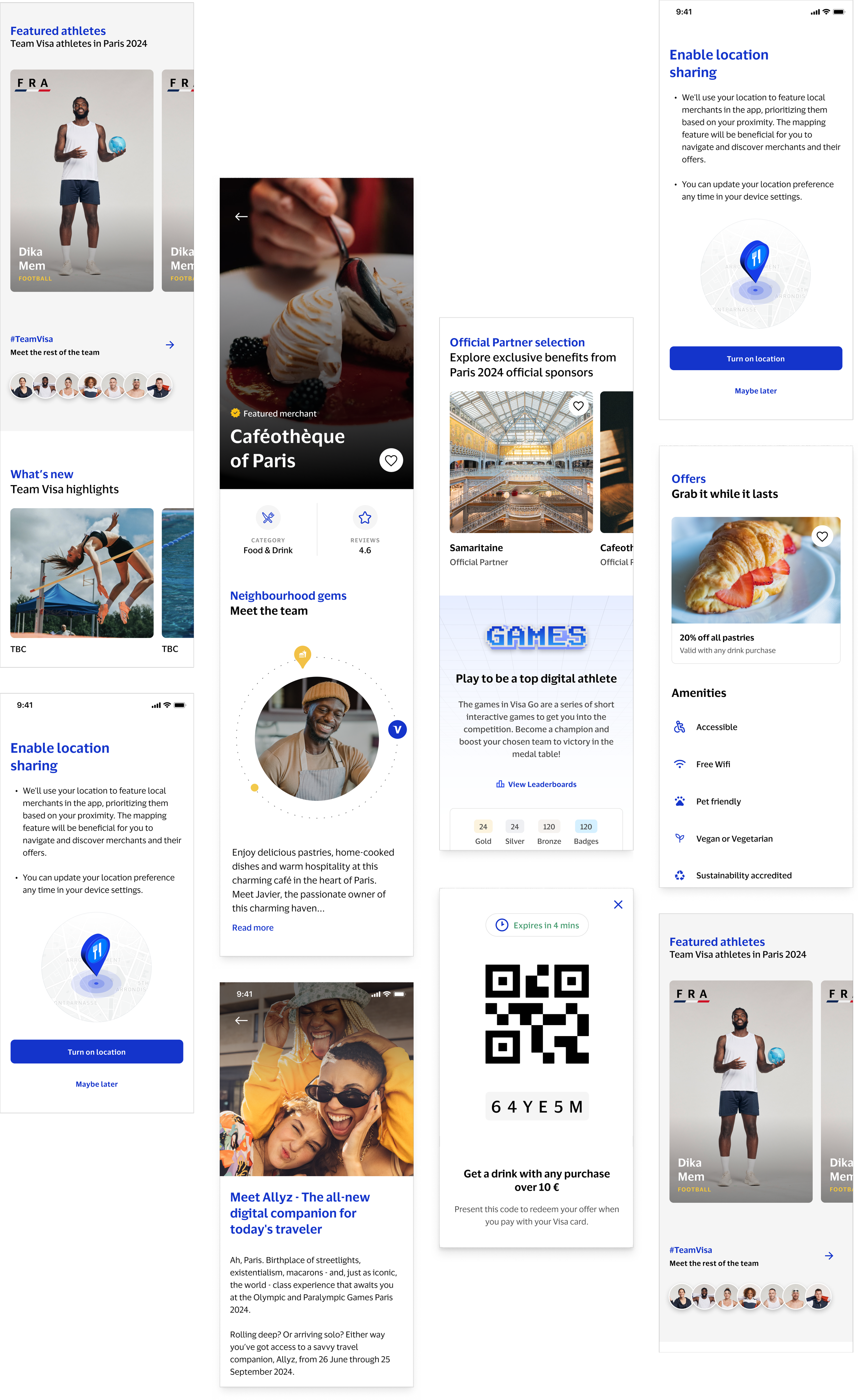
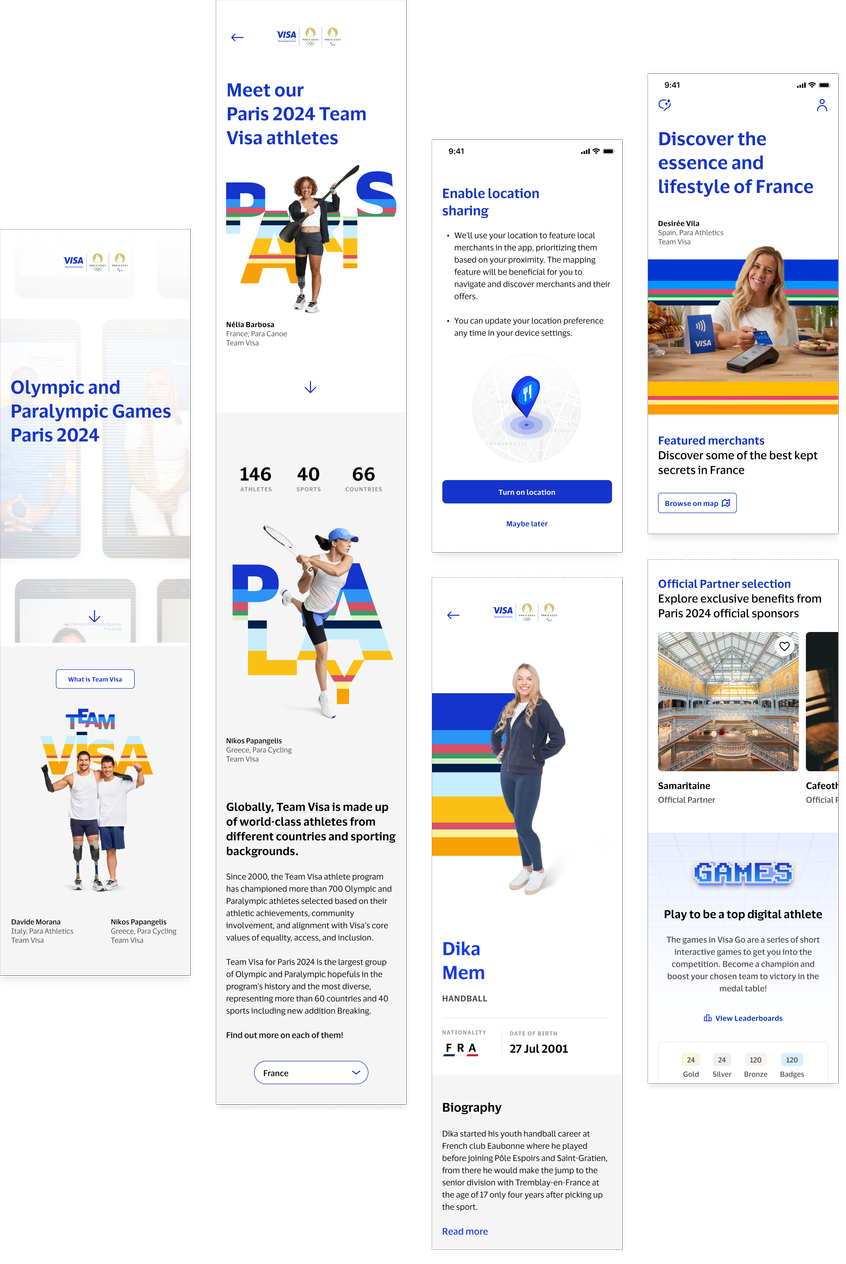
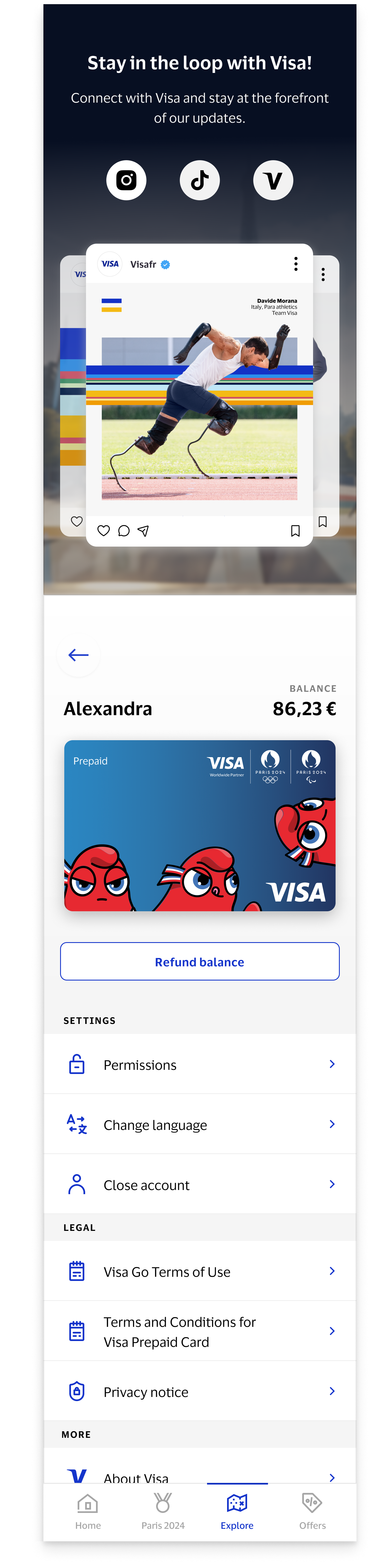
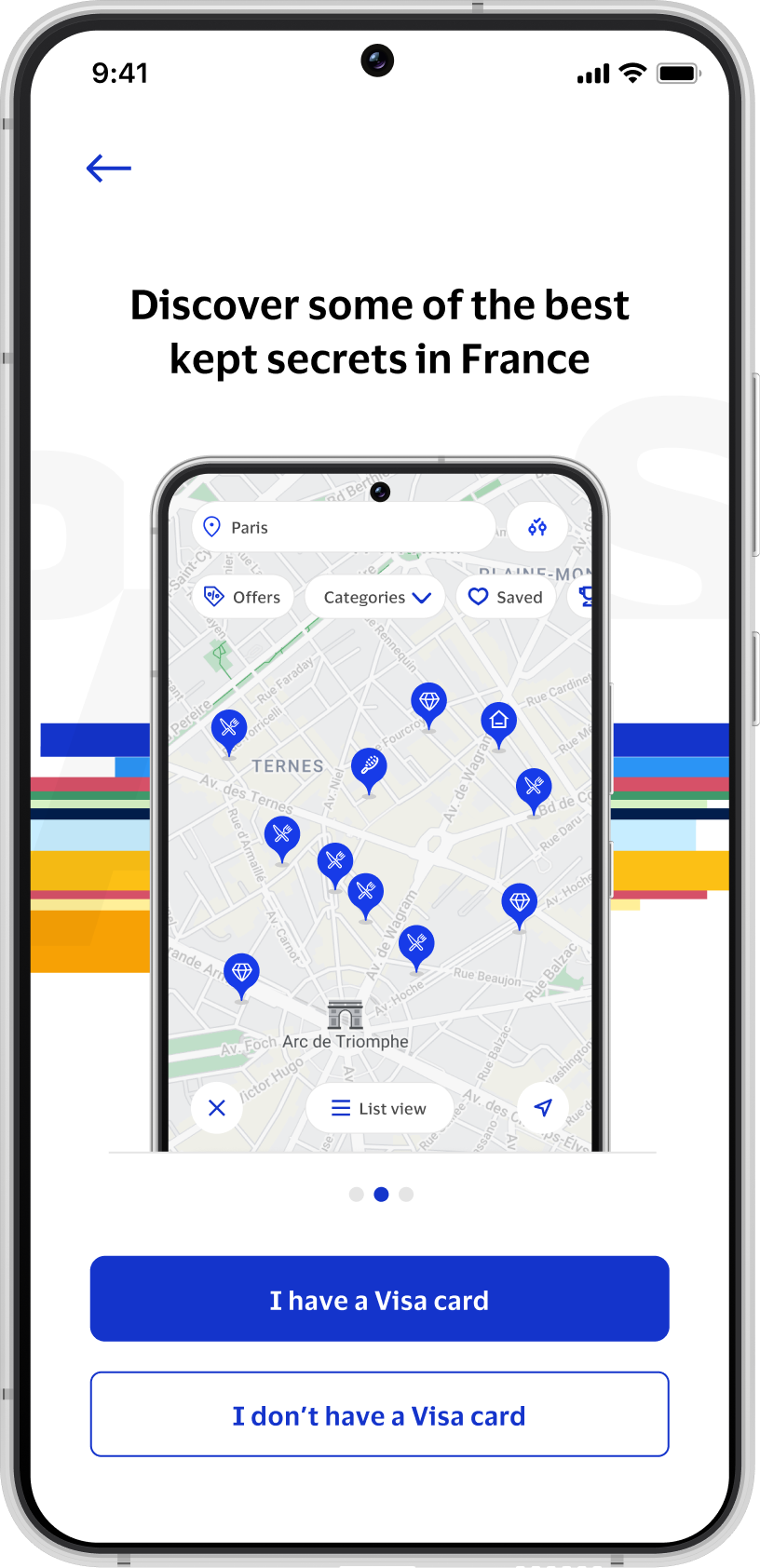
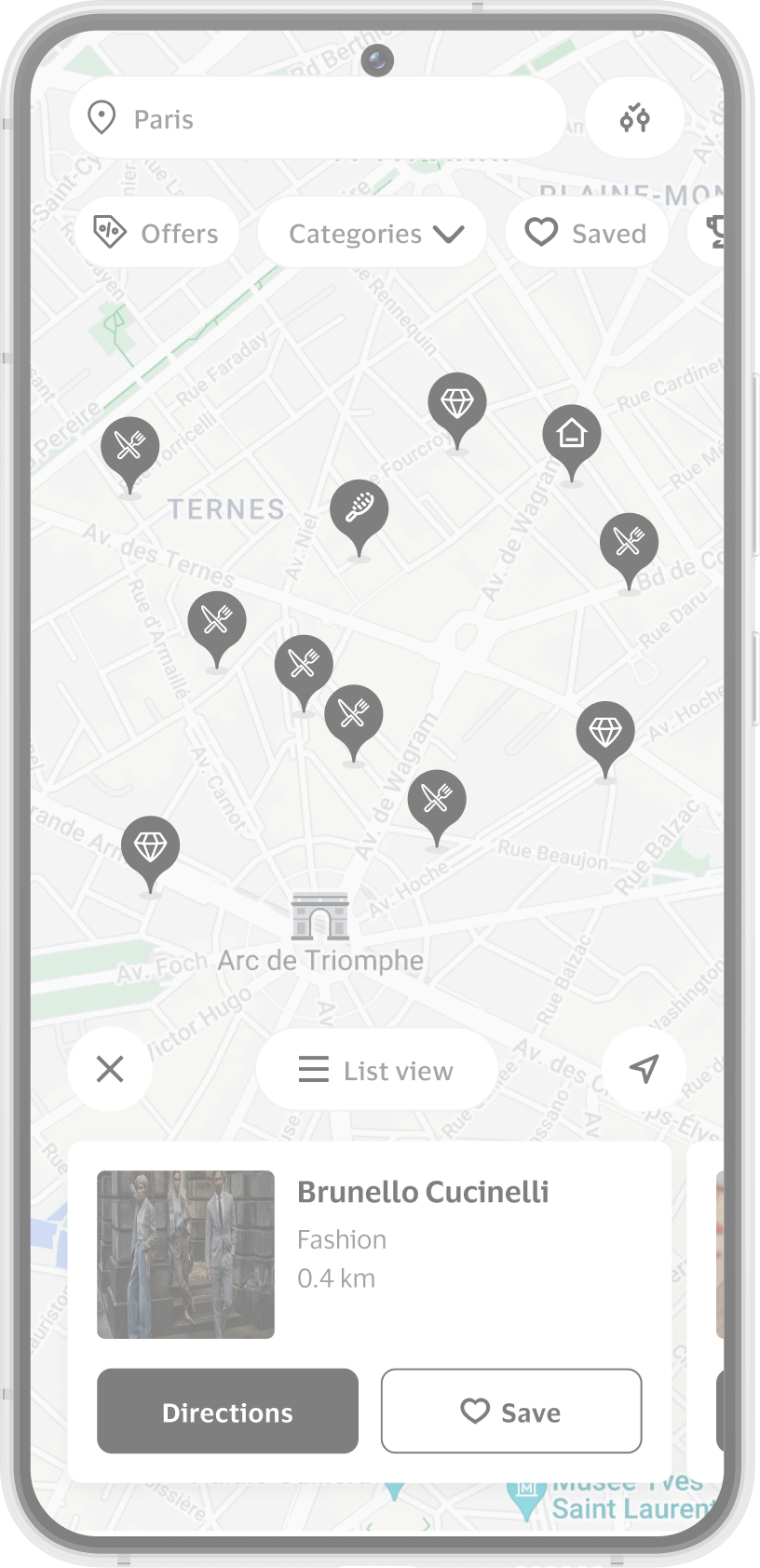
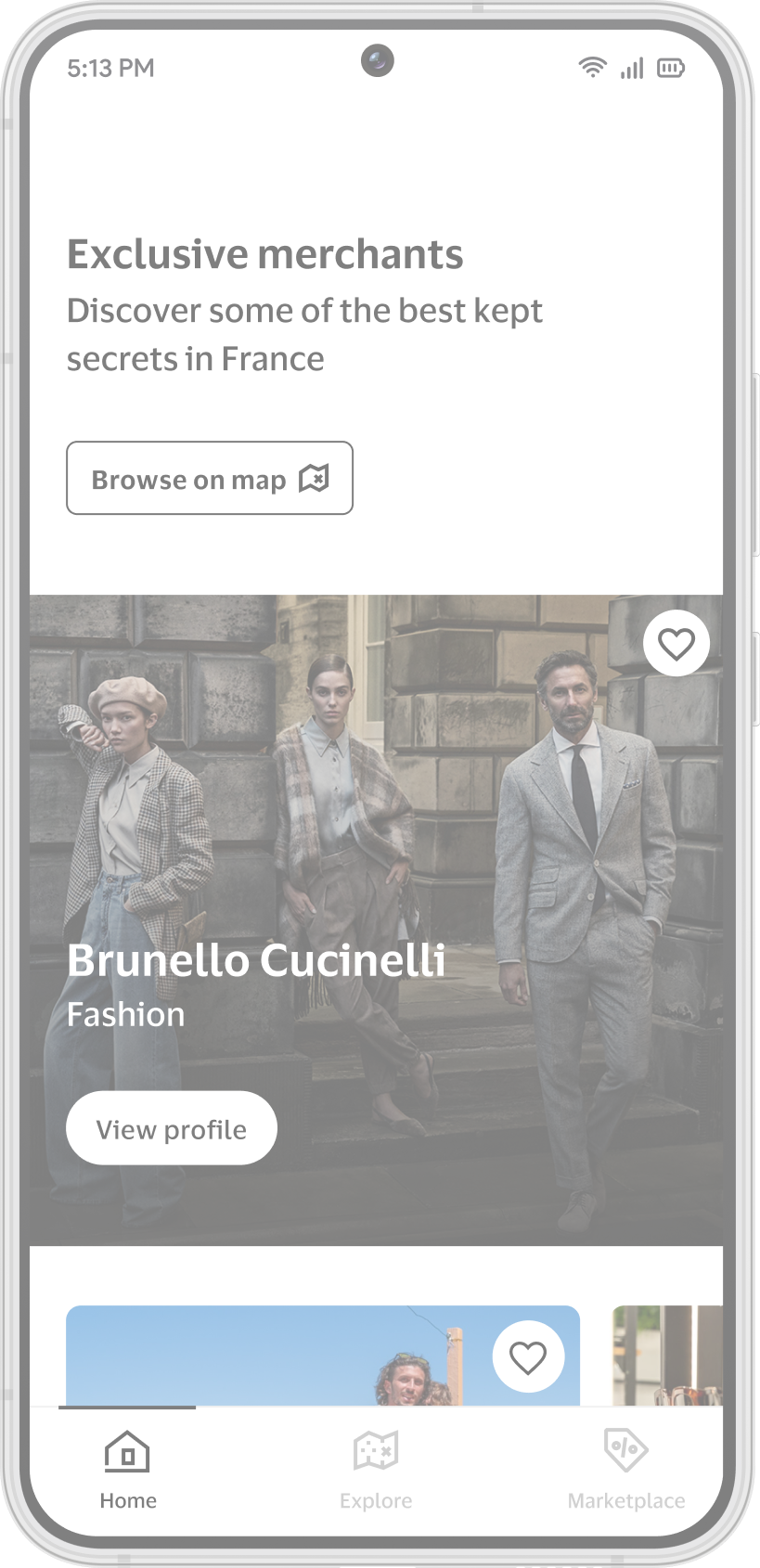
VisaGo was a high-stakes first for the company: a direct-to-consumer mobile app designed to help millions of visitors navigate Paris, activate local SMB offers, and access digital prepaid cards.
Beyond the utility, this was a real-world proof of concept. We had to show that Visa could deliver a consumer-grade product that was as inclusive as it was secure, all on the world’s biggest stage.
The Challenge: Zero Tolerance for Failure
This wasn't a typical product cycle; it was a fixed-deadline, high-visibility launch. We were designing for an incredibly diverse global audience - tourists, athletes, and Paralympians - meaning accessibility wasn't a "nice to have," it was the baseline.
The real friction:
Brand vs. Accessibility
Visa’s classic visual guidelines (like specific blues and font weights) didn't always meet WCAG contrast requirements.
The "Paralympics Bar"
Any accessibility failure during the Paralympics would have been a significant reputational risk for Visa.
Velocity
We had to make definitive calls on what was safe and inclusive enough to build within a window that allowed for zero iteration cycles.
Rather than optimising for visual expression, we prioritised clarity, resilience, and inclusion.
Key Decisions & Strategic Leadership
-
I shifted our process so that accessibility was baked into the wireframes, not "bolted on" at the end.
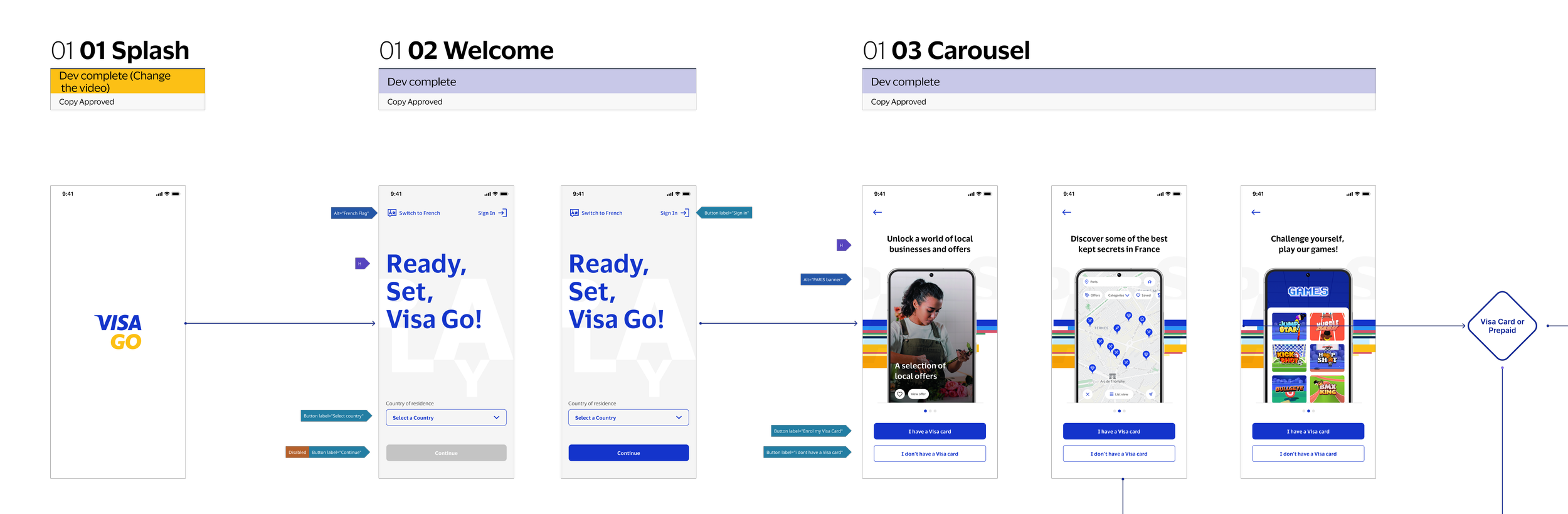
Early Annotation: I applied screen reader labels, logical tab orders, and multilingual support early in the design phase.
Assistive Tech Testing: We ensured every interaction—from card activation to merchant discovery—was fully compatible with native iOS and Android assistive technologies.
-
Rather than treating Brand and WCAG as opposing forces, I acted as the bridge.
I worked with stakeholders to identify where brand rules could "flex" to meet accessibility needs. I helped create a custom, accessible design system that felt like Visa but functioned for everyone, preventing fragmented, one-off fixes.
-
As Visa’s first D2C move, we prioritised predictability over novelty.
Frictionless Security: We designed the digital prepaid card flow to feel secure and "Visa-grade" without making it a chore for the user.
Clarity over Visual Excess: We used clear hierarchy and reassuring copy to earn user trust quickly in a fast-moving, high-stress event environment.
Results & Business Impact
VisaGo launched ahead of the Olympic close and became a benchmark for how Visa approaches consumer products.
102K+ downloads

1,200+ local SMB offers activated

#6 ranked free app in France

4.0* average app store rating

1.1K+ offers activated

792 merchants favourited

New VGAR Benchmark Set internal inclusive design standard

New D2C Blueprint Adopted for future global events

Reflection
This project reinforced that inclusive design is a strategic advantage. Working under "Olympic-level" pressure sharpened my ability to make deliberate trade-offs.
I learned how to prioritise resilience over excess - ensuring that the product worked for the person who needed it most, which ultimately made it better for everyone.